坦白講,我不信任領袖。有關領袖的所有議論,都是危險的胡說八道。那是一種逃避,根本不值得理會。20世紀的重要領袖是希特勒、史達林和毛澤東,他們可能是數百年來最厲害的領袖;這種壞領袖的例子還如此「新鮮」,但仍有許多人渴望出現偉大的領袖,這一點令我非常不開心。我們應該非常害怕領袖才對。我們應該問:「他們主張什麼?他們抱持什麼價值觀?我們可以信任他們嗎?」而不是問:「他們有魅力嗎?」過去一百年間,領袖魅力氾濫成災。……
對我來說,超人執行長沒什麼用。至於企業高層極高的薪酬,我認為那是一種醜事。不討厭金錢的JP摩根1906年說,任何一家組織或公司,如果最高層的薪酬是一般員工的20倍以上,那便是管理不善。他拒絕投資這樣的公司。這仍然是一條好法則,而根據這法則,我們國家有很多公司是我不會投資的。……對了,我認識的執行長,我認識不少執行長,他們並不視自己為超人。他們建立團隊。他們是團隊型領袖。
──「管理大師杜拉克」,美國國家公共廣播WBUR電台,2004年12月8日
2019年5月17日 星期五
杜拉克 :領袖vs 團隊型領袖

2019年5月3日 星期五
An old story tells of three stonecutters who were asked what they were doing. 你所不知道的聖家堂 ~ 聖家堂的工人
An old story tells of three stonecutters who were asked what they were doing. The first replied, ‘I am making a living.’ The second kept on hammering while he said, ‘I am doing the best job of stonecutting in the entire country.’ The third one looked up with a visionary gleam in his eyes and said, ‘I am building a cathedral.’
This story, made famous by Peter F Drucker in his book from 1954, ‘The Practice of Management’, remains a powerful illustrations of the challenges faced by leaders: how do you create the environment within which your people are motivated to reach beyond the task and connect with the broader vision?
【你所不知道的聖家堂 ~ 聖家堂的工人】
聖家堂始建於 1882 年,這十幾年來,我每星期至少帶團去聖家堂 3-4 次(旺季的時候還有可能一星期去超過 7 次),所以,我覺得我應該全世界講中文的人中,進過聖家堂最多次的人 ...... 進聖家堂導覽,還順便監工一下,看看教堂的建造進度。
聖家堂始建於 1882 年,這十幾年來,我每星期至少帶團去聖家堂 3-4 次(旺季的時候還有可能一星期去超過 7 次),所以,我覺得我應該全世界講中文的人中,進過聖家堂最多次的人 ...... 進聖家堂導覽,還順便監工一下,看看教堂的建造進度。
這十幾年下來,導遊越來越欽佩聖家堂的工人,他們不但要具有普通建築工人的技巧,還要會攀岩,導遊曾親眼看過工人從 67 公尺高的地方一台階一台階地爬到最高的塔式吊車的駕駛室,141 公尺高耶!真是非常驚訝,那位塔式吊車司機爬了 74 公尺(二十幾層樓),前後爬十幾分鐘才抵達,如果是普通人,還沒上班就已累壞了,更別談有懼高症的人啦!
照片來源:聖家堂

2019年4月30日 星期二
彼得.杜拉克的回憶錄故事
彼得.杜拉克回憶到,「我十三歲時,有一位具創意的宗教課程老師突然
向班上同學問道:『你們以後想讓別人記得你什麼?』當然,我們沒有一個人
知道該如何回答。所以,這位老師笑著說:『我並不期望你們能回答這個問題。
不過,如果你們到了五十歲還無法回答這個問題,就是在浪費生命。』後來,
我們在六十歲時辦了一場同學會。同學們大都還健在,但從畢業後就沒見過
面,所以剛開始交談時有點不自然。後來,有個傢伙問大家:『你們還記得福
雷格神父和他提過的問題呢?』我們都記得。而且,每個人都說,雖然要等
到四十幾歲時才算真正了解,但這個問題的確對大家有很大的影響。」
「我一直都在問:『你想讓別人記得什麼?』這個問題能引發你努力自我更
新,因為它會促使你把自己看成不一樣的人,一個你想成為的人。如果你是
幸運的,有位像福雷格神父這樣道德崇高之士在你早年時就提出這個問題,
那麼你日後就能不斷拿這個問題來詢問自己。」彼得.杜拉克給我們留下豐
富的管理學資產和風範,因此我們都記得他。
---
彼得.杜拉克說,「你無法預測未來,但可以創造。」從來沒有管理過人
的杜拉克,竟然號稱是「發明管理學的人」,成為管理大師中的大師,他就是
真正的天命型領導者,一生不斷「刻意練習」他的不能,運用他與生俱來的
天賦──「旁觀者」,完成個人的使命,改變了世界。
~~宏遠興業葉清來總經理的邀請函-2019年宏遠興業自辦展及研討會
2019年2月25日 星期一
教中學到The Little Engine That Could
The Little Engine That Could is an American fairytale (existing in the form of several illustrated children's books and movies) that became widely known in the United States after publication in 1930 by Platt & Munk. The story is used to teach children the value of optimism and hard work. Based on a 2007 online poll, the National Education Association named the book one of its "Teachers' Top 100 Books for Children".[1]
The Little Engine That Could-Full Movie


2019年2月5日 星期二
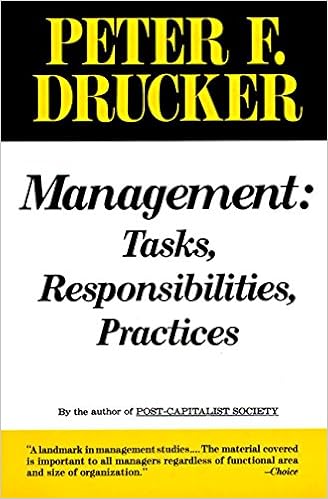
Management: Tasks, Responsibilities and Practices (1973/1993/2001;Essential 版 )
70年代初出版
Management: Tasks, Responsibilities, Practices Paperback – April 14, 1993
---
Essential 版
Japanese version 2001 first print; 2011, 49th print

2019年1月26日 星期六
戴明1983年得Taylor Key Award (管理學界大獎)
| 1983 |
Recipient of the Taylor Key Award, American Management Association.
|
戴明因1982年出版
Quality, Productivity and Competitive Position (此書1986年改名 Out of the Crisis). 而得獎
| ||
| 1982 |
|
The Taylor Key Award is one of the highest awards of the Society for Advancement of Management. This management awards is awarded annually to one or more persons for "the outstanding contribution to the advancement of the art and science of management as conceived by Frederick W. Taylor."[1][2]
The Taylor Key has been awarded in cooperation with the American Management Association.[3]
Award winners[edit]
The award winners have been:[4]
- 1937: George W. Barnwell,[5] and George T. Trundle Jr.[4]
- 1938: Asa A. Knowles,[6] and Hugo Diemer[4]
- 1939: Moritz A. Dittmer[7] and William H. Gesell[4][8] and
- 1940: Henry S. Dennison[4]
- 1941: Morris L. Cooke[8]
- 1942: King Hathaway[8]
- 1943: Harlow S. Person[8]
- 1944: Henry P. Kendall[8]
- 1945: Henry P. Dutton[8]
- 1946: Robert B. Wolf[9]
- 1947: Harry Arthur Hopf[10]
- 1948: Dexter S. Kimball[4]
- 1949: Herbert C. Hoover[4]
- 1950: Brehon B. Somervell[11]
- 1951: No Award[8]
- 1952: Harold F. Smiddy[4] and Donald K. Davis[12]
- 1954: Henning W. Prentis[4]
- 1956: F. J. Roethlisberger[13]
- 1958: Ralph C. Davis ; Frank Henry Neely[14]
- 1960: John B. Joynt[15]
- 1961: Lawrence A. Appley[4]
- 1963: Harold B. Maynard[16] and Lyndall F. Urwick[17]
- 1965: Phil Carroll[18]
- 1966: Robert S. McNamara[19]
- 1967: Peter F. Drucker[20]
- 1968: Nobuo Noda[21]
- 1971. Donald C. Burnham[22]
- 1972: John F. Mee [23]
- 1973: J. Allyn Taylor[24]
- 1974: Harold Koontz[25]
- 1980: Edward C. Schleh[26]
- 1982: Allan H. Mogensen[27]
- 1983: W. Edwards Deming[3]
- 1998: Nobuo Shigenaga[28]
- 2000: Moustafa H. Abdelsamad[29]
- 2005: William I. Sauser, Jr.[30]
Other prominent winners of the Taylor Key Awards have been Don G. Mitchell, and Kaichiro Nishino.[2]
Deming becomes emeritus professor at New York University. 1975
| 1975 |
|

訂閱:
文章 (Atom)